


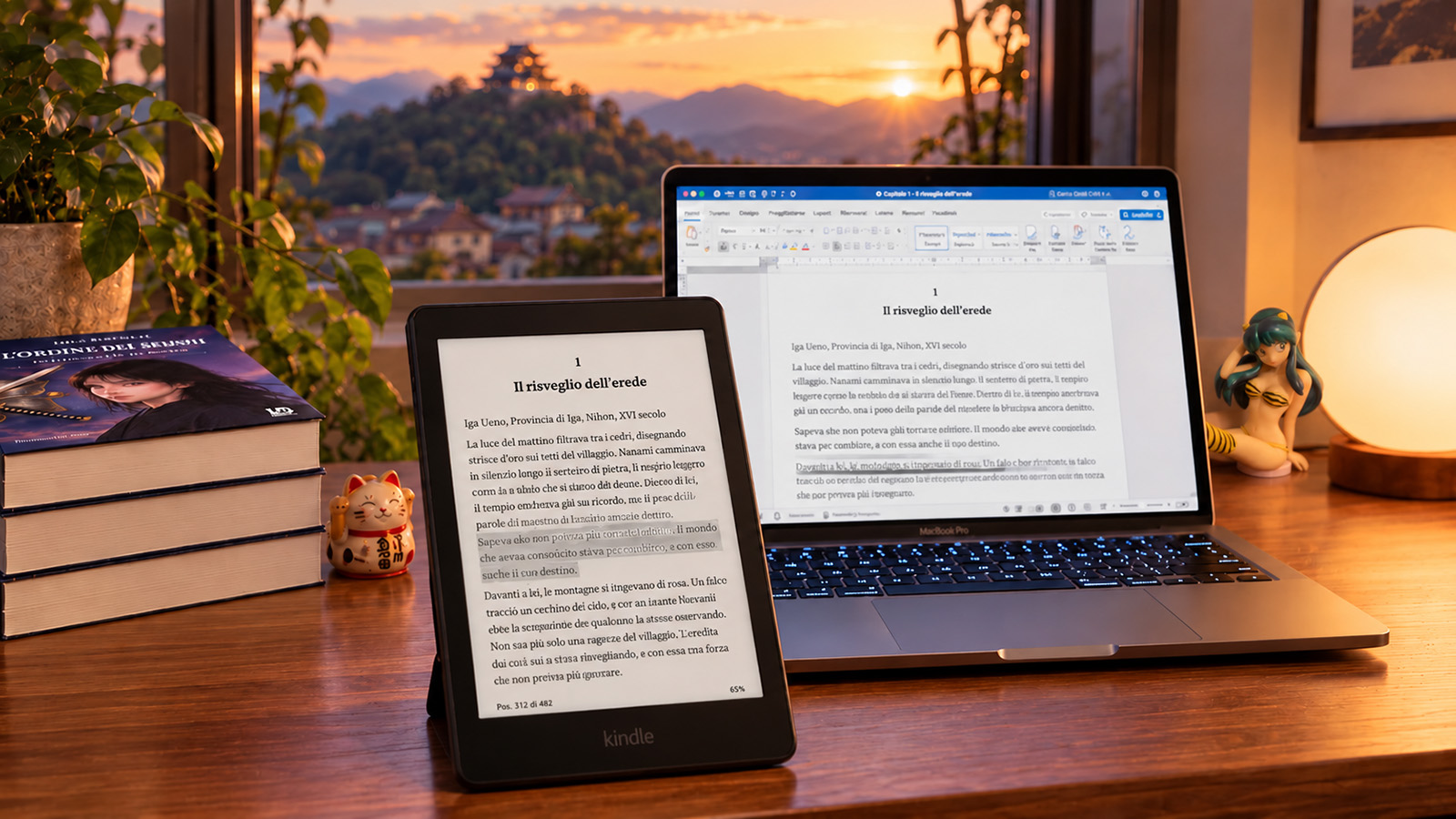
I start working on the layout while I am still writing. I usually write a chapter in Word and, as soon as I finish it, lay it out in InDesign. This lets me see how much space it takes up and keep track of the book’s length. For the volumes of The Chronicles of Myoo, I have chosen a length of 304 pages, so seeing the layout as the story grows helps me gauge how close I am to that target.
When I reach the end of the novel, I do a complete first reread directly in InDesign. The text can still change considerably at this stage. I do more than correct typos or adjust a few sentences: I also revise entire passages, changing or rewriting them when I feel they need it.
After this first read, I start again from the beginning, this time working through one chapter at a time. I read it in the layout, copy the updated text back into Word, and listen to it using text-to-speech.
Listening to my own words is a different experience from reading them. A sentence that seemed to flow well on the page can sound unnatural when spoken aloud, while repetition can become much more obvious. Hearing the text helps me focus on its rhythm and notice passages I might otherwise skim over.
This is also where I find artificial intelligence useful. I use it to look for errors I may have missed and highlight sentences that deserve another look. I consider every suggestion and decide whether to make a change, preserving the style and meaning of what I have written.
As I work, I make corrections in both the Word document and the layout so the two versions stay in sync. Once I have finished listening to and revising a chapter, I prepare its XHTML file, which will become part of the ebook. Working this way means that by the time I reach the final chapter, I have also completed the digital version of the novel.
At that point, I open the ebook in Kindle Previewer and start reading it again there. The text is the same, but it looks different, giving me another opportunity to check it. Every correction is also carried over to the print layout, so the work on one edition improves the other.
During this read, I also collect the names to include in the IPA pronunciation lexicon. The world of Myoo contains many proper names and invented or foreign terms whose spelling does not always make their pronunciation clear. I prepare these pronunciation guides with readers who use text-to-speech tools in mind, so they can hear those names pronounced correctly.
Next comes another read on an actual Kindle. I want to see the book on the device readers will use and check it in that form as well, noting anything I still need to change.
After all these steps, I consider the revision ninety percent complete. It might seem like the time to finish the job once and for all, but I prefer to leave it open a little longer. I set the novel aside and start writing the next one.
I return to the text only months later, once I have spent enough time away from those pages. In the meantime, I have been working on another story and can return to the previous one with a clearer mind, less caught up in the work I have already done.
That distance is what makes the final reread so important. After spending so much time with a novel, I also need to stop looking at it before returning to read it one last time.